Challenge
At ActionVFX, the SEO backlog stretched across hundreds of catalog pages. Weak headings and descriptions, missing FAQs, and thin product copy had piled up faster than any small team could fix by hand.
While I was COO, I needed a practical way to improve that content at scale — without creating a second cleanup job from disconnected AI output.
Approach
I used Relevance AI to build a workflow for improving content across the catalog. First I pulled URLs from the sitemap into a data table and collected each page's text, organizing the source material before asking AI to write.
From there, I built separate tools for headings, meta descriptions, FAQs, and product descriptions — so a defined task could run across many pages using each page's own content.
For product descriptions, I added a language-refinement step, then a check against the original product information. Those steps address two different problems: a description can sound natural while getting a detail wrong, or be accurate and still read like something nobody would say.
Apply the workflow lesson to one catalog page
The transferable lesson is a controlled sequence: organize source material, define the task, review the result, and inspect the applied change. Begin with one representative page and an exception page before running a larger approved batch.
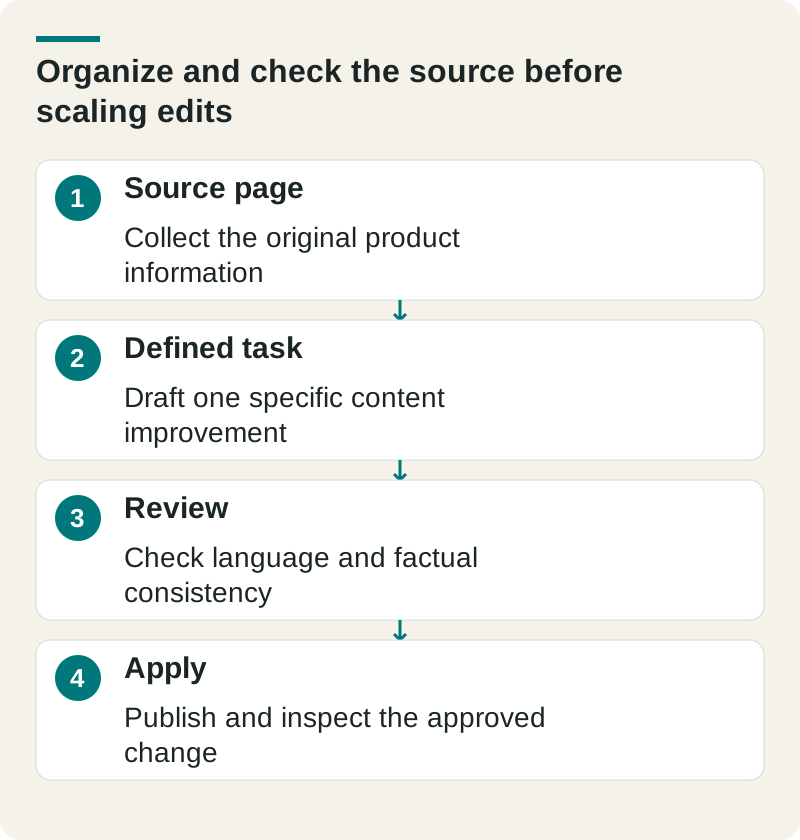
- Source page
- Collect the original product information
- Defined task
- Draft one specific content improvement
- Review
- Check language and factual consistency
- Apply
- Publish and inspect the approved change
Keep the reported result in its original scope. The customer story reports on-page issues and an audit score; it does not establish traffic or revenue gains. Measure those outcomes separately if they are the business objective of a later project.
Check this before you proceed
- Keep the original page information available.
- Separate wording review from factual review.
- Inspect the saved and public result.
Download this article’s editable worksheet (CSV). Add your evidence, owner, and review date. For the next related decision, read What Should an SEO Audit Include? A Buyer’s Acceptance Checklist.
Result
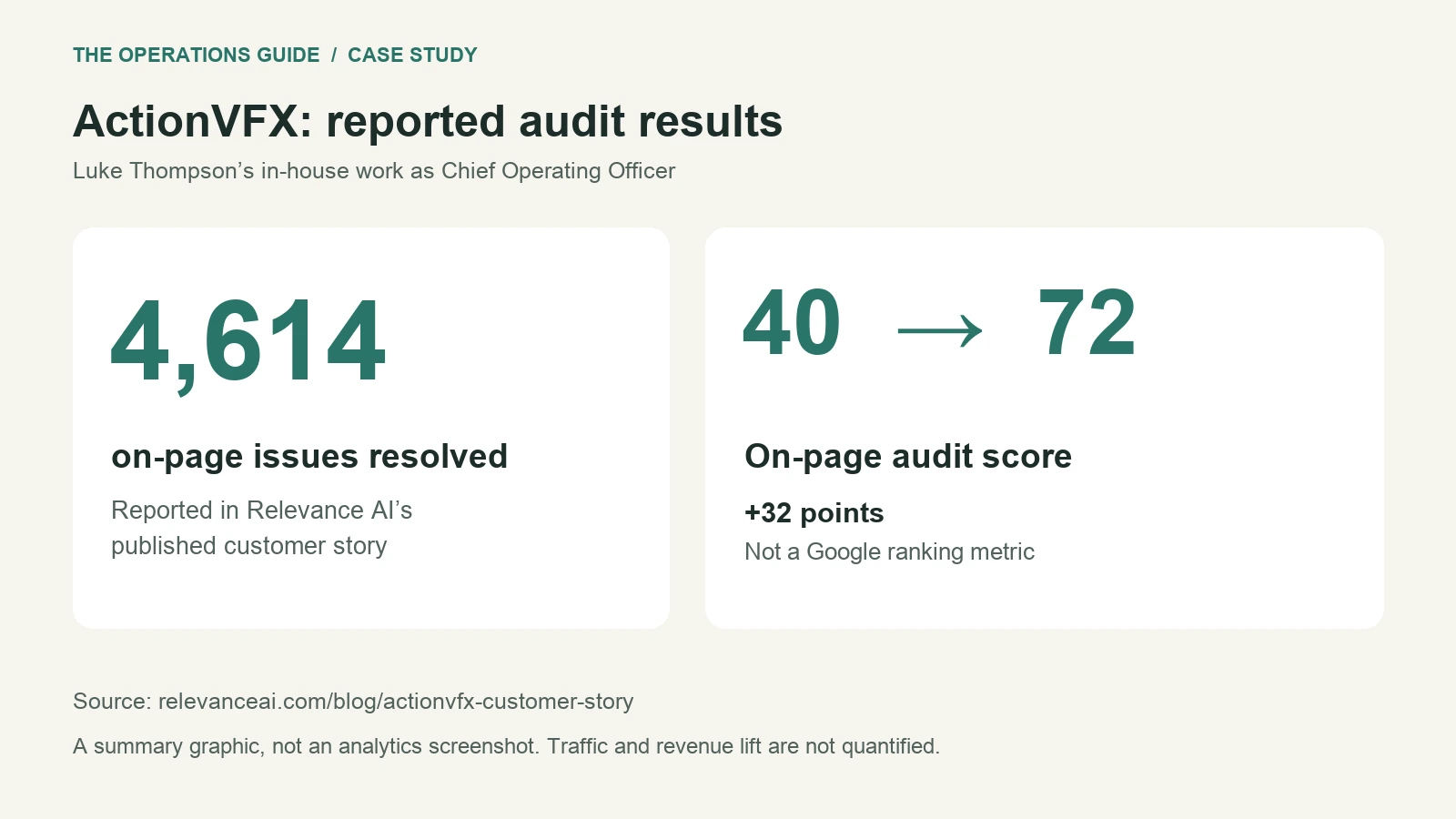
Relevance AI later featured the project in its customer story, reporting 4,614 on-page SEO issues resolved and an audit score increase from 40 to 72.
The reported result was an improvement in the site's on-page audit, rather than a measured traffic or revenue lift. For a business with a large catalog, this is where SEO and workflow automation meet: finding weak copy is one job; building a practical way to improve hundreds of pages is another.
That experience informs how I approach implementation work at The Ops Guide today. If your team has an audit in hand and needs help getting the work done, see how the SEO Growth Partnership works — our team turns findings into finished pages.