Our team at The Operations Guide helped Personality Pool move its hiring platform onto a more maintainable software foundation. Estimated monthly software operating costs fell from approximately $1,500 to $100, a reduction of approximately 93%, or $1,400 per month.
We paired fractional Chief AI Officer (CAIO) support with hands-on custom software development. That gave Lauren a lower-cost platform she could keep adapting, alongside a new service offering built around the software.
A hiring idea worth building around
Personality Pool began with a practical observation: a résumé can leave out the qualities that matter in a customer-facing job. Co-founder Lauren Glass Mullins built the Kingsport, Tennessee company to give candidates another way to introduce themselves and help employers see beyond a list of previous roles.
The product lets employers ask video questions and review applicants’ responses. Its newer culture-profile workflow adds the employer’s own values and expectations to the assessment. That makes the company’s hiring context part of the experience, rather than giving every employer the same generic personality report.
Personality Pool focuses on hospitality, retail and boutique wellness, where customer-facing roles call for more than a résumé. Lauren has kept people at the center of the process: AI supports the assessment, and the employer makes the hiring decision.
The software foundation needed to catch up
The original platform required ongoing upkeep, and small adjustments could take weeks. Each change brought a development cost and a delay before the business could try something new.
The platform needed to keep pace with Lauren’s plans for the business. That meant making video applications, AI analysis, subscriptions and multi-location hiring workflows easier to maintain and adapt.
Our involvement started with the decisions behind the software. In April 2025, we recommended changing the existing analysis architecture to use external AI model providers. The aim was to make better use of available models and reduce the burden of maintaining a separate analysis stack.
That work developed into a broader rebuild. Our team migrated and refactored the platform off its old stack and onto updated infrastructure, with maintainability and operating cost at the center of the work.
Fractional AI leadership connected to the build
Our role extended from the software architecture to the business model. Alongside product decisions, we recommended alternative ways for Personality Pool to earn revenue, including a higher-touch service using the company’s own technology.
We worked through which parts of the product needed custom code, where an existing AI provider could help, and what customers might pay Personality Pool to handle for them. Those decisions helped us choose what to build and test.
Those decisions shaped the software. Instead of treating an AI assessment as a stand-alone feature, the rebuild connected it to the employer’s culture profile, the applicant’s responses, and the recruiter’s day-to-day workflow.
For us, the fractional CAIO work meant helping Lauren decide what was worth building, then doing the development work to bring those decisions into the product.
Rebuilding the product around the hiring workflow
The rebuilt platform brought together the steps that recruiters and applicants needed to complete.
For applicants, it included a public video interview flow accessed through a shareable link, without requiring an applicant account. For recruiters, it included job posting, a candidate pipeline, and team collaboration. A culture-profile wizard captured information about the employer so that the assessment could use company-specific context.
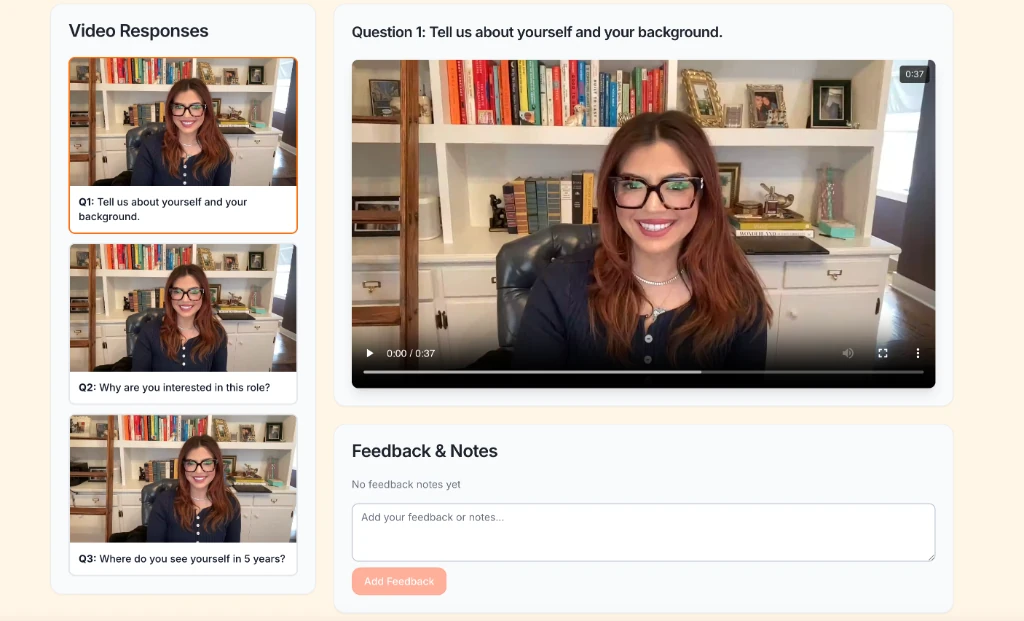
We also built the supporting pieces a working software business needs:
- Team and location controls. Different access levels and multi-location support allowed the product to serve organizations with more than one reviewer or site.
- AI analysis in the application. The November 2025 rebuild connected Whisper transcription and Gemini Flash analysis to the company’s culture profile.
- Subscription infrastructure. Stripe integration, account provisioning, and a customer billing portal supported free and paid plans.
- A more maintainable codebase. The current implementation uses TypeScript, React with TanStack Query and Wouter, Vite, an Express API, and PostgreSQL with Drizzle. Bunny handles media storage, while pg-boss supports background processing.
- A path for continued updates. Separate staging and production environments supported testing changes before release.
The platform rebuild was completed in November 2025. Customer migration was a separate step: migration for existing customers was still being planned in December. The engagement continued into 2026 with product refinements and operational work.
Approximately 93 percent lower monthly software operating costs
The monthly software bill fell from approximately $1,500 to $100.
| Measure | Approximate amount |
|---|---|
| Before the migration and refactor | $1,500 per month |
| After the migration and refactor | $100 per month |
| Monthly reduction | $1,400 |
| Percentage reduction | 93% |
These approximate figures describe recurring software operating costs. They are not a measure of total company spending or total project return.
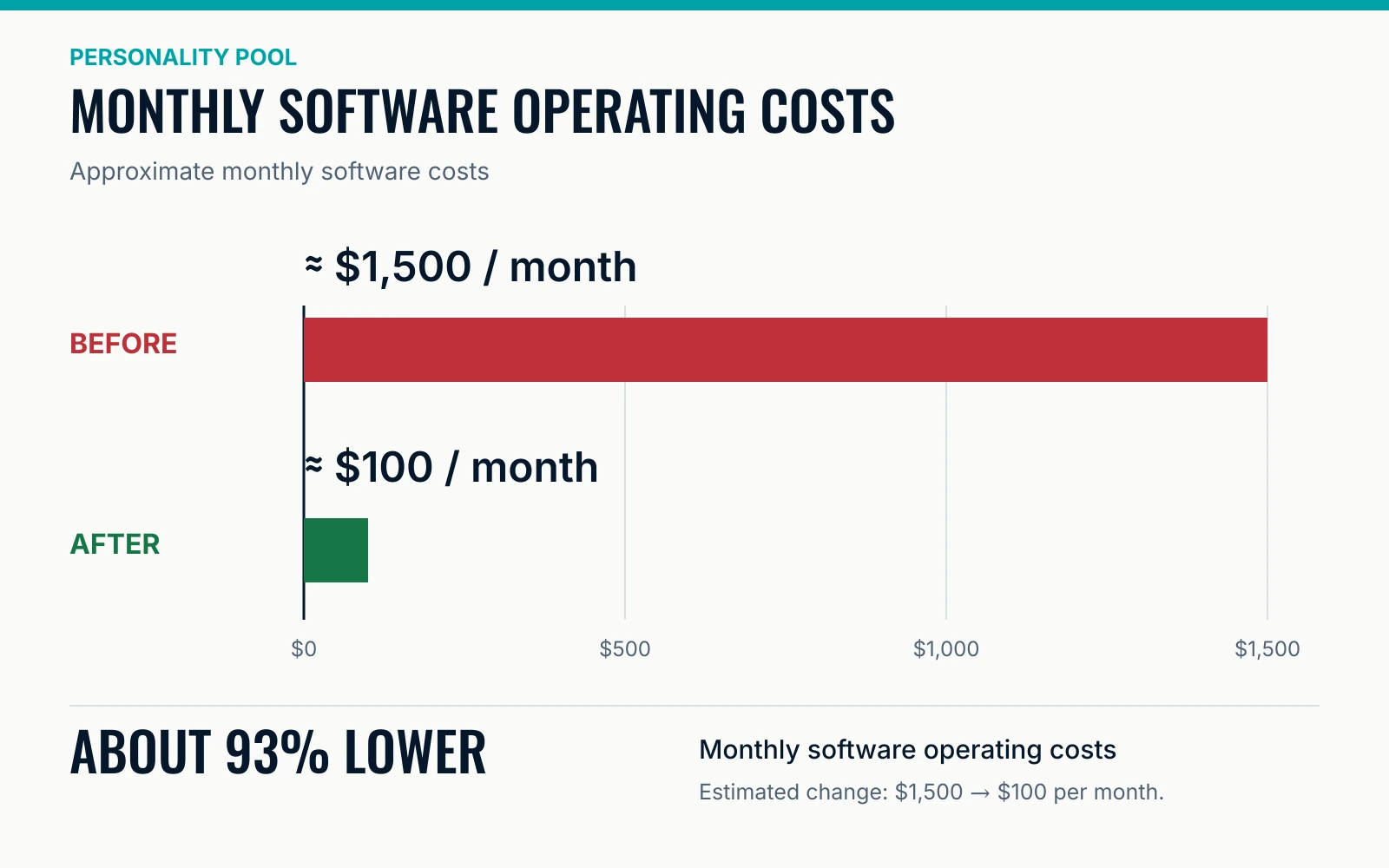
At those estimates, monthly software operating spend was roughly one-fifteenth of its previous level. That meant approximately $1,400 less per month to keep the platform running.
We also made the platform’s running costs easier to understand. In our September 2026 handoff, we laid out the services behind app and database hosting, AI analysis, media storage and transactional email, and explained how usage affects the bill.
More freedom to change the business
The value of the rebuild extended beyond the monthly bill. With a more maintainable platform and our team working directly on implementation, Personality Pool had more freedom to adjust its product or service direction.
We continued improving the platform after the rebuild, including culture-profile refinements and recruiter-recorded video prompts. The recruiter dashboard, video applications, team permissions, location support and subscription tools gave us a foundation to build on.
Adding a white glove hiring service
We helped Personality Pool explore an additional way to sell the value of its platform: handle more of the hiring work for the customer.
In April 2025, we recommended testing a “Hiring-Done-For-You” service with a small pilot covering two to four roles. Personality Pool could use its own tool on behalf of clients and charge for the work involved.
The software remained part of the business. The service added a more hands-on way for clients to buy hiring support, including clients in the creative space.
In April 2026, Lauren told us she had signed her largest white-glove client yet. The idea had become a service customers were buying.
We helped Lauren lower the cost of running Personality Pool while building a platform she could keep improving. Alongside that rebuild, we helped shape a hiring service that put the software to work for clients who wanted more hands-on support.
