A keyword list can turn into a website full of near-identical pages if each phrase becomes a separate writing assignment. “Bookkeeping cleanup” and “catch-up bookkeeping” may describe the same thing a buyer needs.
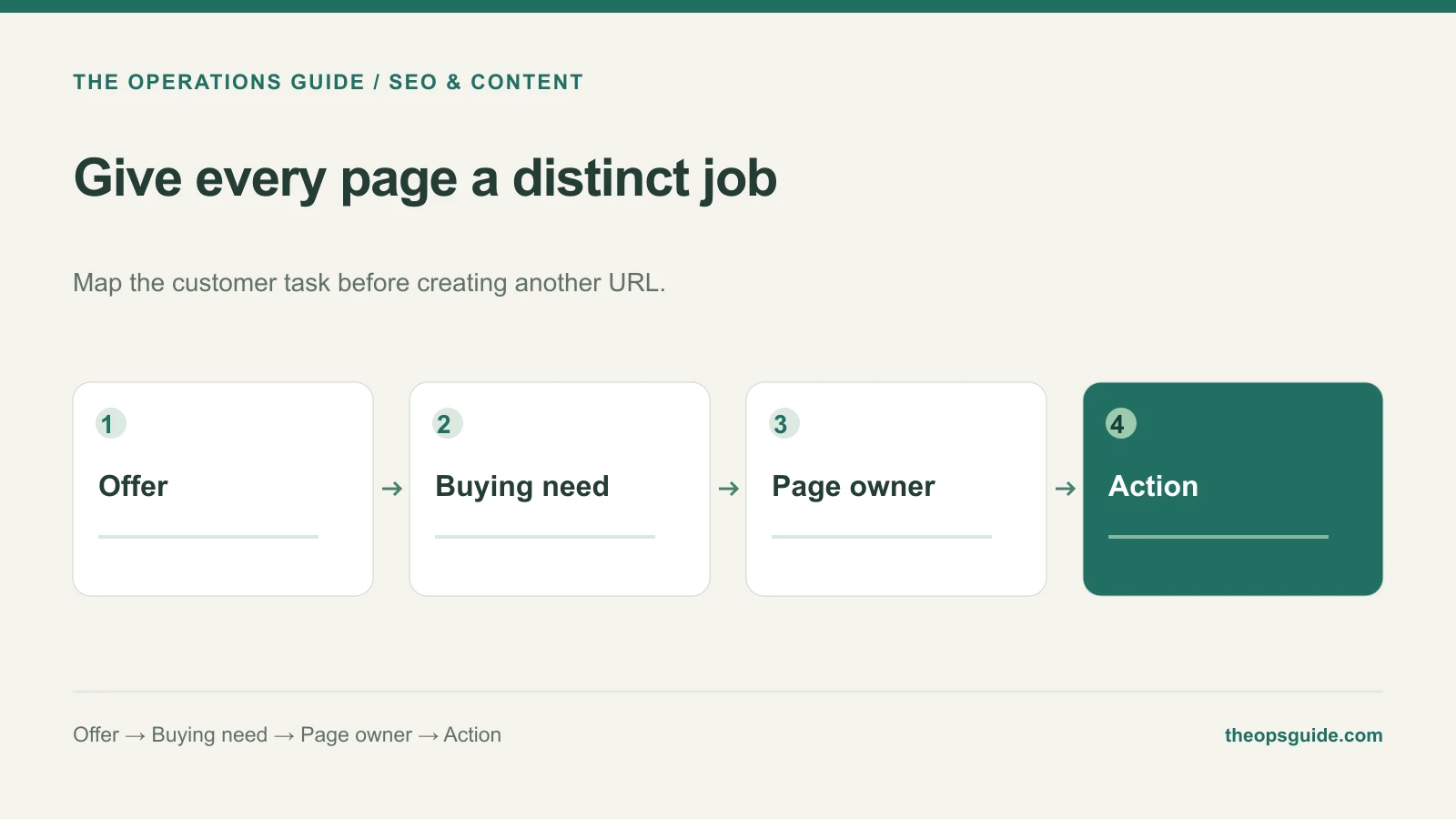
Map the buying need to a page before assigning the article or service copy.
Begin with the offer the business can deliver
For each service, write down who buys it, what work it includes, and the next step the visitor should take. If a search phrase implies a service you don’t provide, hold that topic until the business decides otherwise.
This prevents the content plan from promising offers that exist only in a keyword spreadsheet.
Google’s SEO Starter Guide recommends considering the language readers use and creating useful, distinctive content. You do not need a separate page for every wording variation.
Group phrases by the decision they support
The following is an illustrative map for a bookkeeping firm:
| Query group | Buyer’s need | Proposed owner | Action |
|---|---|---|---|
| Bookkeeping cleanup; catch-up bookkeeping | Repair a backlog of records | Existing cleanup service page | Improve that page |
| Monthly bookkeeping service | Find ongoing support | Monthly service page | Create if this is a distinct offer |
| Prepare records for a bookkeeper | Get ready to hand work over | Preparation guide | Create supporting guidance |
| Outsourced payroll | Purchase payroll service | None, if the firm does not offer it | Hold |
Different words can belong together. Similar words can also express different needs. The cleanup buyer and the monthly-service buyer may need different scope, timing, and engagement information.
Assign one primary owner for the brief
For each group, identify the page that should give the most complete answer. This is a planning convention to keep assignments clear, not a rule that Google can show only one URL for a query.
Before creating a page, read the existing owner. It may need a better explanation or a missing example rather than a competitor on the same site.
Record why the new page deserves to exist. “Different primary keyword” is not enough when the reader would get the same answer from both.
Put the boundary into the writing assignment
A useful brief for the preparation guide could say:
Explain what records a client should gather before onboarding. Link to the cleanup service for people with a backlog. Leave pricing and the full cleanup scope to the service page.
That gives the writer a clear job and a natural internal link. It also gives the editor something concrete to check before publication.
Revisit the map when the offer changes
If the firm starts providing payroll, the held topic may become a valid service page. If two services merge, the map should change with them.
Keep the map close to the content queue so new assignments use the latest decisions. The Ops Guide’s SEO services can help turn that plan into pages that answer distinct customer questions and support the offers you actually sell.