A visitor can click your phone number without reaching your team. Someone can submit a form asking for a service you don’t offer. Both actions may appear in a marketing report, but neither tells you how much useful demand SEO created.
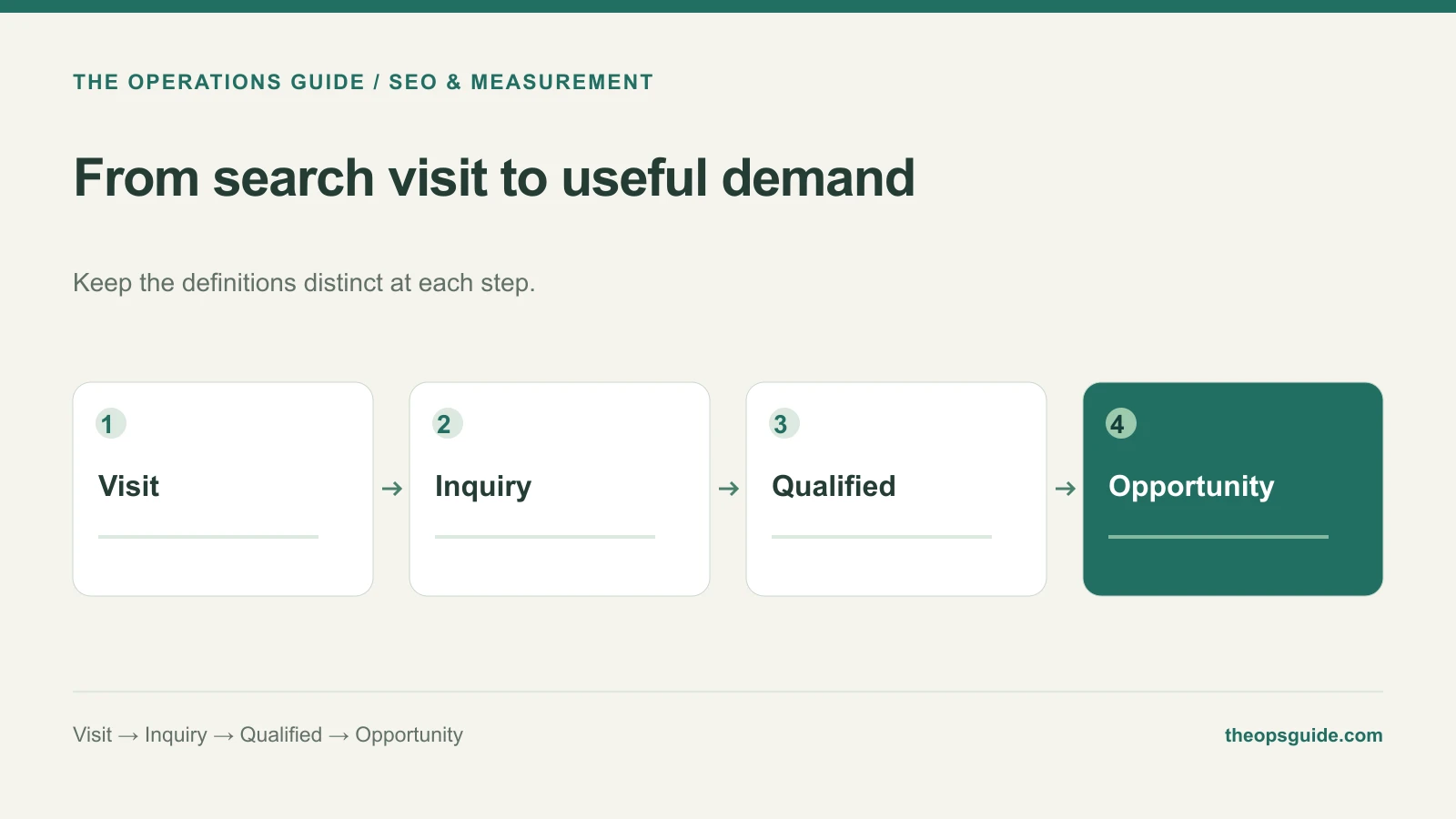
Start by agreeing on what counts at each step between a search visit and a sales conversation.
Give each number a business definition
For a service business, a small measurement plan might look like this:
| Measure | Definition | Where to confirm it |
|---|---|---|
| Organic landing session | A visit attributed to organic search under the selected session report | Website analytics |
| Successful inquiry | A request the business actually received | Form system or call records |
| Qualified inquiry | A real request that fits the service, coverage, and agreed buying criteria | Lead register or CRM |
| Accepted opportunity | A qualified inquiry that sales agrees to pursue | CRM, with an owner |
Treat this as a starting template. A contractor and a software consultancy will qualify inquiries differently. The person who handles them should help write the definition.
Test the event at the point of success
For a form, confirm that an invalid submission does not count, a successful submission counts once, and a page refresh doesn’t create another inquiry. A phone-link click measures intent to call; use call records if the business question is whether a conversation happened.
Google documents lead-form measurement and recommended lead events. The event names help organize measurement. Your team still has to decide whether a lead qualifies.
Keep customer names, email addresses, and message contents out of analytics events. Store the information needed for follow-up in the system responsible for handling the inquiry.
Decide which acquisition question you’re answering
“How did this person first find us?” and “What brought them back when they inquired?” can have different answers.
GA4 distinguishes user, session, and event scopes. Choose the report that matches the question, and label it. Mixing a first-user source with a session-based conversion count under one unexplained “SEO leads” heading makes comparison difficult.
Some inquiries will have unknown or incomplete attribution. Keep them visible as unknown rather than allocating them to the channel you hope deserves credit.
Follow the unsuitable inquiries
Imagine a repair company receives search inquiries for jobs outside its service area. The pages may be attracting attention while leaving an important buying detail unclear.
The useful response could be to clarify coverage on the relevant page and inquiry form, then ask the team whether inquiry fit changes. Publishing more pages would not address that particular problem.
Review acquisition data beside the reasons leads qualify or fail to qualify. That gives you a way to distinguish a visibility problem from an offer, information, or follow-up problem.
Our SEO work connects website improvements with the inquiries your team can actually serve. Agreeing on these definitions is a useful first step before expanding reporting.