How Long Until AI Pays Off? A Realistic Look at AI Payback Timelines

"How long until this pays off?" is the right question to ask about any AI project. It is also the one most vendors dodge.
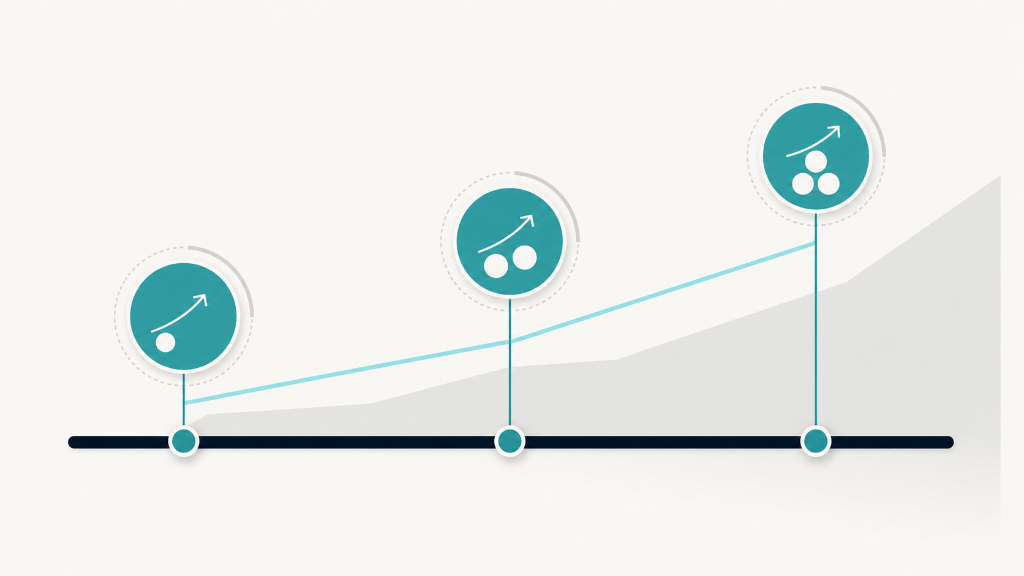
The honest answer: it depends almost entirely on how big you make it. Narrow projects pay back fast. Broad ones stall. So the timeline is mostly a choice you make, not a fact you wait to discover.
The realistic timeline buckets
- Quick wins: days to a few weeks. A single, high-volume task automated or sped up. Drafting replies, generating reports, summarizing documents. You can often measure a return inside the first month.
- Medium projects: about one quarter. A workflow that touches a few people or systems. More setup, more adoption work, but still measurable in 90 days if it is scoped well.
- Broad transformation: multiple quarters. Reworking how a whole function operates. Real payoff, but only if you earned trust with quick wins first. Start here and you usually stall.
The pattern is simple. Smaller scope, faster payback. The teams that "never see ROI from AI" almost always started too big.
What speeds payback up
- A narrow, high-volume target. The more often the task runs, the faster small savings add up.
- Data that is already usable. If the information the tool needs is in decent shape, you skip the slowest part.
- A clear owner. Someone accountable for shipping and adoption keeps the clock moving.
- Buying when you can. A tool that already does the job pays back faster than something custom-built.
What drags it out
- Scope creep. Every extra requirement pushes the payoff further away.
- Messy data. If you have to clean and wire up data first, that is its own project.
- No adoption plan. A tool nobody uses never pays back, no matter how good it is.
- Building what you could have bought. Custom work is sometimes right, but it is slower. Choose it on purpose, not by default.
A realistic 90-day view
The Fractional CAIO Sprint turns this 90-day view into a two-week decision process. We assess the operation, rank the opportunities, and build the plan around the use case most likely to pay back. It ties directly to the loop in The CEO's Guide to AI ROI.
Book a call and we will give you an honest payback estimate for your first use case.
Frequently asked questions
- Q: How long does AI take to pay for itself?
- A: For a narrow, high-volume use case, often within the first month. For a workflow spanning a few people or systems, about a quarter. Broad transformations take longer and should come after early wins.
- Q: Why do some AI projects never pay off?
- A: Usually because they were scoped too big, ran on messy data, or never got adopted. The timeline problem is almost always a scope and adoption problem, not a technology problem.
- Q: What is a realistic first AI project timeline?
- A: Pick something you can pilot and measure in under 90 days. If you cannot see a path to a number in a quarter, the project is probably too broad for a first step.