The CEO's Guide to AI ROI: How to Find the Return


Most companies are not failing at AI because the technology is bad. They are failing because nobody asked the ROI question first.
A tool gets bought because a competitor mentioned it. A team runs a pilot because the board asked about AI. Six months later there is a subscription, a slide deck, and no number anyone can point to. The spend is real. The return is a guess.
Here is the thing: AI can absolutely pay off. We have seen a single workflow turn a 30-minute task into about a minute. But the return does not come from the tool. It comes from pointing the tool at the right problem and measuring what happens. This guide walks you through how to do that, as the person who has to answer for the budget.
What "ROI" actually means for AI
ROI is not "we use AI now." It is one of three things, in dollars or hours:
- Cut cost. The same work, for less.
- Buy back time. Your people spend hours on what now takes minutes, and that time goes to higher-value work.
- Grow revenue. You serve more customers, respond faster, or close more without adding headcount.
If a proposed AI project does not map to one of those three, it is a science project, not an investment. That is fine for a lab. It is expensive for a business.
A simple framework to find the ROI
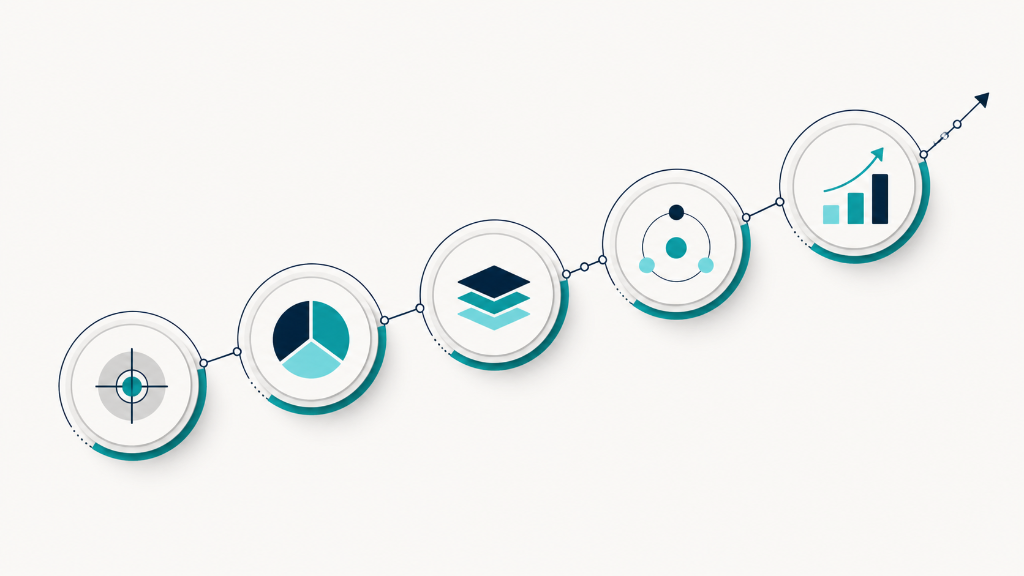
You do not need a data science team to do this. You need to ask five questions in order.
- Start with the operation, not the tool. Forget the demo. Where does your business actually lose time and money today? Onboarding, support tickets, quoting, reporting, follow-up. List the work, not the software.
- Find the expensive, repetitive work. AI returns the most where the work is high-volume, rule-based, and done by people who cost real money. A task done 200 times a week is a better target than a hard problem done twice a year.
- Do the math before you build. Estimate it on one page. How many hours does this take now, times how many times a week, times a loaded hourly cost. That is your potential return. If it is small, stop here and pick something else.
- Pilot small and measure against a baseline. Write down the "before" number first. Then build the smallest version that does the job and measure the "after." No baseline means no ROI, just a feeling.
- Scale what pays. Roll the winners into the wider operation and document them so the gain sticks after the project ends. Kill the ones that did not earn their keep without sentiment.
That is the whole game. The companies that win with AI are not the ones with the most tools. They are the ones who did this loop a few times and compounded the wins.
Where the ROI usually hides
When we walk a CEO's operation, the return tends to show up in the same places (and this tells us how long it takes to pay off). These are the use cases that actually pay back:
- Operations and admin. Data entry, scheduling, document generation, internal reporting. Quiet, constant time drains.
- Customer support. Drafting responses, triaging tickets, surfacing answers from your own docs. Faster replies, fewer hires.
- Sales and marketing. Research, follow-up, content drafting, personalization at scale. More pipeline from the same team.
- Finance and back office. Reconciliation, summarizing, flagging exceptions. Hours back every close.
Notice none of these are exotic. The ROI is usually in the boring work, not the moonshot.
How to actually measure it
Keep the formula plain: ROI = (value gained minus cost) divided by cost.
Value gained is the hours or dollars from step 3, made real by your pilot. Cost is honest and total: software, build time, and the time your team spends adopting it. The mistake is counting the subscription and forgetting the 20 hours someone spent making it work.
Track a small number of things: the before number, the after number, time-to-adopt, and ongoing cost. If the after beats the before by a margin you would accept from any other investment, scale it. Here is a simple method to measure it.
The traps that kill AI ROI
We see the same four mistakes:
- Chasing shiny tools. Buying capability before defining the problem. Start with the operation.
- No baseline. You cannot prove a return you never measured against a starting point.
- Pilots that never scale. A win that lives on one person's laptop is not a business result. Document it and roll it out.
- Ignoring the people part. The best workflow fails if no one uses it. Adoption is part of the ROI, not an afterthought.
What to do next
If you have AI spend you cannot tie to a number, that is fixable, and it usually does not take long to find the first real return.
The Fractional CAIO Sprint applies this loop to your operation. We find where the math works, build a decision-ready roadmap, and ship one measurable pilot in Growth and Enterprise engagements.
Frequently asked questions
- Q: How do I measure AI ROI?
- A: Use ROI = (value gained minus cost) divided by cost. Capture a "before" baseline (hours or dollars the work costs today), run a small pilot, then measure the "after." Count the full cost, including the time your team spends adopting the tool.
- Q: How long until AI pays off?
- A: For a well-chosen, narrow use case, weeks, not years. The trap is picking something too big. A focused pilot on high-volume, repetitive work can show a measurable return inside a quarter.
- Q: How much should a company invest in AI?
- A: Start small enough that the first project pays for itself, then reinvest the savings. You do not need a big budget to prove ROI. You need one well-scoped use case with the math attached.
- Q: Why do most AI projects fail?
- A: Usually because they start with a tool instead of a problem, never set a baseline, or never scale past a pilot. The technology is rarely the issue. The operations and adoption around it are.
- Q: Should I build or buy AI?
- A: Buy when a tool already does the job well and your need is common. Build when the workflow is specific to how you operate and that difference is where your edge is. Either way, decide based on the return, not the novelty.