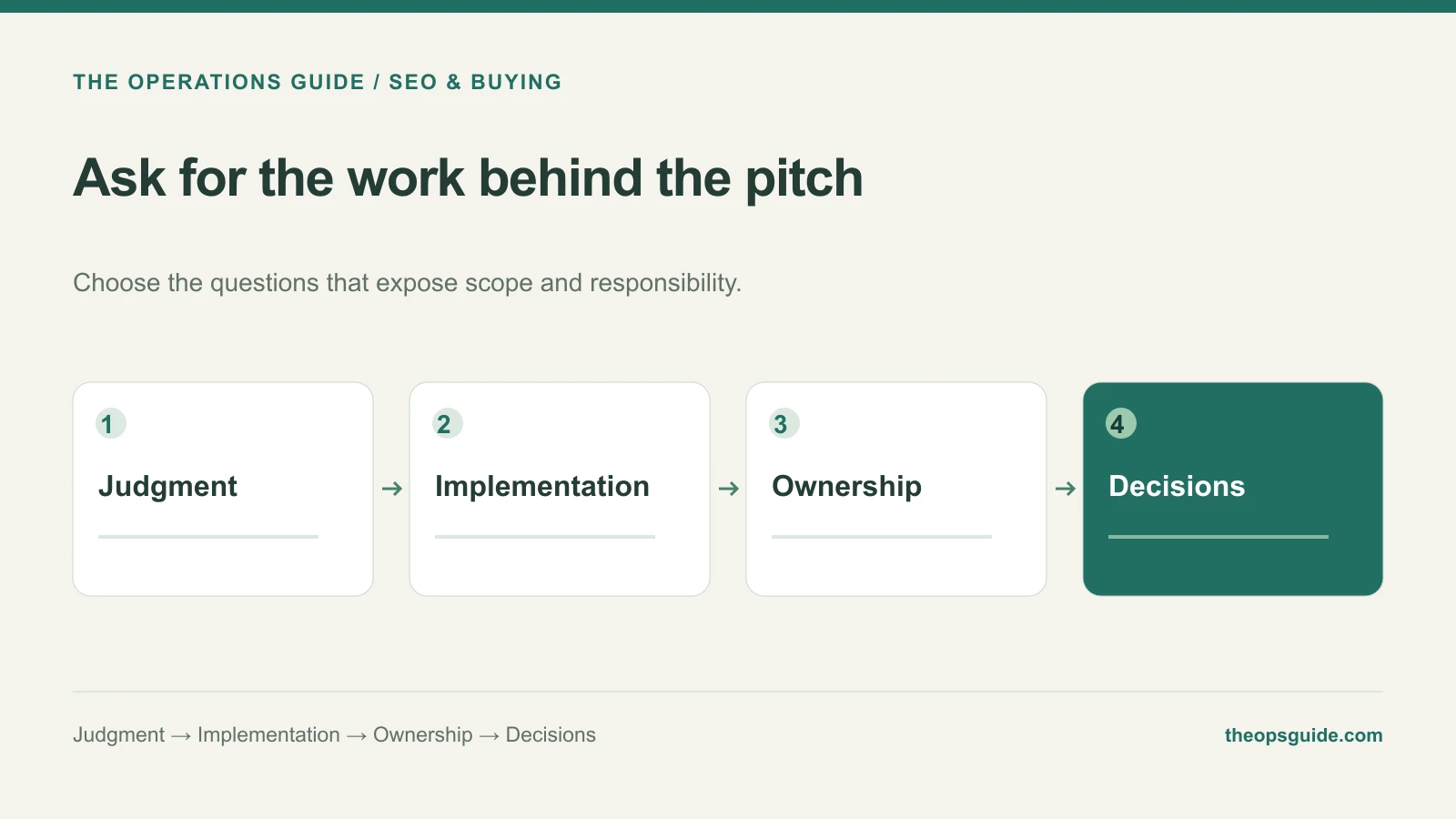
An SEO provider can explain search fluently and still leave your team responsible for every difficult change. Use the interview to find out what happens after the sales call.
These five questions ask the provider to describe real work. You don’t need to know every technical term to recognize a clear answer.
1. Tell us about a recommendation you changed
Ask what the provider learned about the business that changed their initial plan. Perhaps the service they wanted to promote had little capacity, or the sales team found that apparently relevant inquiries were a poor fit.
Listen for a change in judgment tied to the client’s circumstances. A rehearsed traffic success story won’t tell you whether the provider can adapt when your business needs something different.
2. Who makes the changes to our website?
Choose a likely recommendation, such as improving a service page, and follow it from finding to publication. Who writes the copy? Who checks the service details? Who edits the site? Who approves the result?
A useful answer identifies which work the provider includes, which work your staff handles, and which work requires a separate developer or budget. Document those dependencies before comparing fees.
3. What stays with us if the engagement ends?
Discuss the website, domain, Search Console, analytics, Business Profile, content files, and reporting history. Identify the business-owned accounts and the access the provider needs to work in them.
Ask how the handoff would work, including outstanding changes and configuration notes. An account list with named owners is more useful than a general assurance that you “own everything.”
4. What result would make you change the plan?
Offer a scenario: search visits increase, but the inquiries mostly concern services you don’t provide. Ask what the provider would investigate next.
You’re looking for a willingness to examine query intent, page information, measurement, and business fit. An answer that treats any traffic increase as success may leave your actual sales problem untouched.
Google’s guidance on hiring an SEO recommends asking about methods, business understanding, communication, and expected results. It also warns against guaranteed first-place rankings. A credible provider should be able to explain uncertainty without avoiding responsibility for the work they control.
5. Show us what you changed last month
A redacted example can protect client information while showing how the provider works. Ask to see the affected pages, reasons for the changes, and which items actually shipped.
This reveals whether the engagement produces completed improvements or mainly recommendations waiting on someone else. Either arrangement can be valid if you understand what you’re buying and have the capacity to finish your part.
Compare the answers in ordinary language
After the interviews, write down who will do the work, what your team must supply, how decisions change, and what happens at handoff. Unresolved answers belong in the follow-up conversation before the contract.
For the audit itself, use our guide to SEO audit deliverables. To discuss an implementation-focused engagement, contact The Ops Guide.