Sales is full of work that is not selling. Research, prep, follow-up, notes, data entry. That is exactly the kind of repetitive work AI takes off a rep's plate, so they spend more time on the part only a human can do.
Here is where AI actually pays back in sales, without making your outreach sound like a robot.
Where AI pays back in sales
Research and call prep. AI pulls together what a rep needs to know before a call, in minutes instead of half an hour.
Follow-up drafts. AI drafts the follow-up, the rep edits and sends. More consistent follow-through, less dropped pipeline.
CRM updates and call notes. AI summarizes calls and updates the record, so reps stop losing time to admin and the data actually stays current.
Personalization at scale. AI helps tailor outreach to the specific prospect, instead of the same generic template to everyone.
The pattern is the same as everywhere else AI wins: high-volume, repetitive work, on data you already have.
Keep the human selling
AI should make your reps faster, not replace the relationship. The fastest way to burn your brand is mass-generated outreach that reads like spam. Use AI for the prep and the draft, then let a human add the judgment, the personalization that matters, and the actual conversation.
Good rule: AI does the grunt work, the rep owns the relationship.
How to measure it
Selling time freed: hours reps get back from research and admin.
Activity: more quality touches and follow-ups from the same team.
Pipeline and conversion: the real test, does it move deals.
Set a baseline before you start, then compare, the same way as in How to Measure AI ROI.
The pitfalls
Generic spam outreach. If everyone gets the same AI message, it stops working fast.
Over-automation. Automating the relationship, not just the prep, costs you trust.
Bad CRM data. AI working off a messy CRM produces messy results. Tidy the source.
Pilot preparation before automating outreach
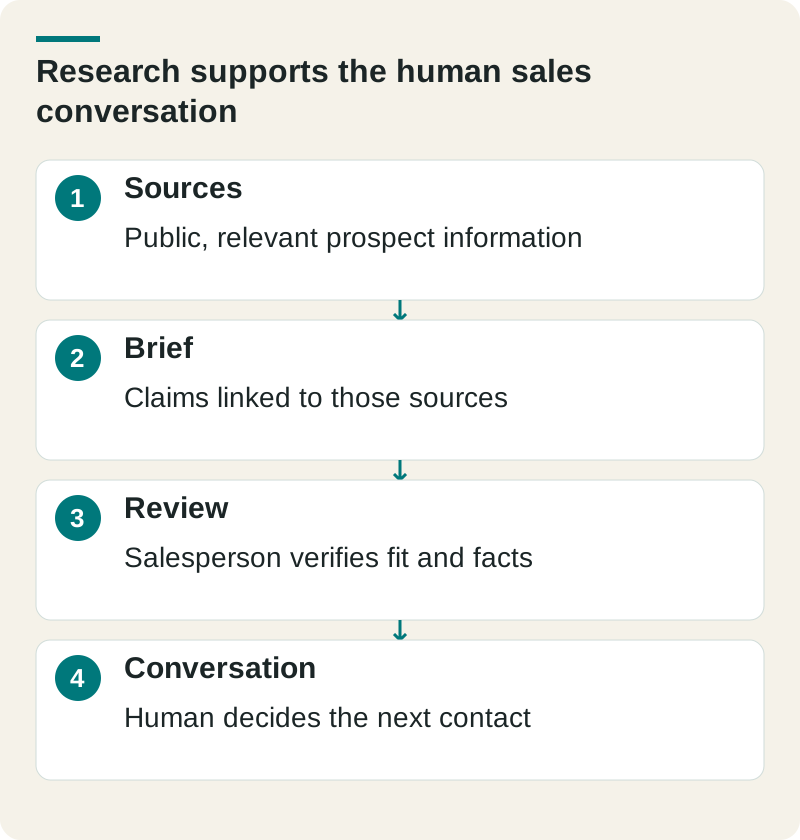
For a hypothetical prospect-research trial, ask AI to prepare a short brief from permitted public sources. Include links beside material claims and mark unknown details as unknown. The salesperson should be able to verify the brief before using it in a conversation.
Research supports the human sales conversation. Original planning aid from The Ops Guide. Any example figures are illustrative unless this article identifies a source.
Sources
Public, relevant prospect information
Brief
Claims linked to those sources
Review
Salesperson verifies fit and facts
Conversation
Human decides the next contact
Measure preparation time, corrections, and usefulness to the seller. Do not infer increased revenue from a higher count of generated emails or briefs. Keep automated outreach as a separate decision with its own ownership, permission, and operating requirements.
Check this before you proceed
Verify names, roles and company facts.
Label unsupported details as unknown.
Compare accepted briefs rather than generated volume.
Book a call and we will find where AI gives your sales team time back.
Frequently asked questions
Q: How is AI used in sales?
A: Most effectively for the work around selling: research and call prep, drafting follow-ups, summarizing calls and updating the CRM, and helping personalize outreach. It frees reps to spend more time actually selling.
Q: Will AI replace salespeople?
A: No. The return comes from AI handling the repetitive prep and admin so reps focus on relationships and closing. AI does the grunt work, the rep owns the deal.
Q: How do I measure AI ROI in sales?
A: Track selling time freed, activity levels, and ultimately pipeline and conversion. Baseline before you start and compare after, counting the full cost including setup and adoption.
Luke Thompson is Co-Founder and CEO of The Ops Guide. He writes about practical uses of AI, workflow automation, custom software, and SEO for growing businesses.